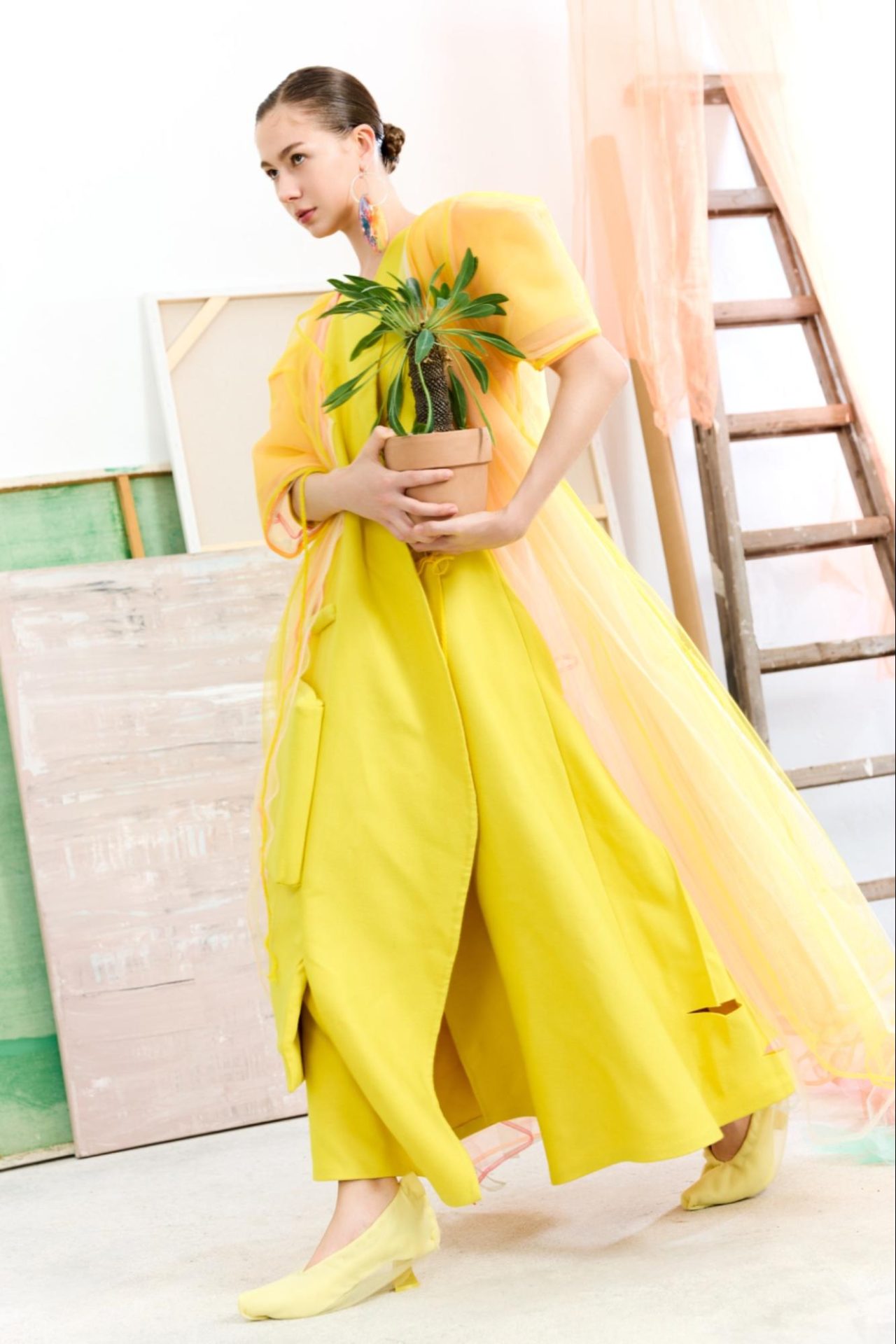
Liying Zheng is the designer behind NYLYNOZ, whose recent ethereal drop, “Color as Identity,” has the fashion world mesmerized. She earned her MFA at Parsons, where her thesis collection walked the runway at New York Fashion Week in 2024. Today she builds up color through the intricate stacking of sheer layers of mesh and organza. Follow her on Instagram @nylynoz, and see her collections at nylynoz.com.

DomaChroma: What is your favorite color, and why?
Liying Zheng: Currently, the most meaningful color for me is blue, which is also the primary hue chosen for the NYLYNOZ logo. Blue signifies calm, hope, and comfort, feelings that perhaps stem from the endless ocean or a clear, bright sky. Throughout this journey of building the brand, amidst the intricate creative process and commercial explorations, blue acts as a psychological anchor. It enables me to rediscover internal order and tranquility within a complex world of color.
DC: How do you define “Color as Identity,” and what does it mean to you?
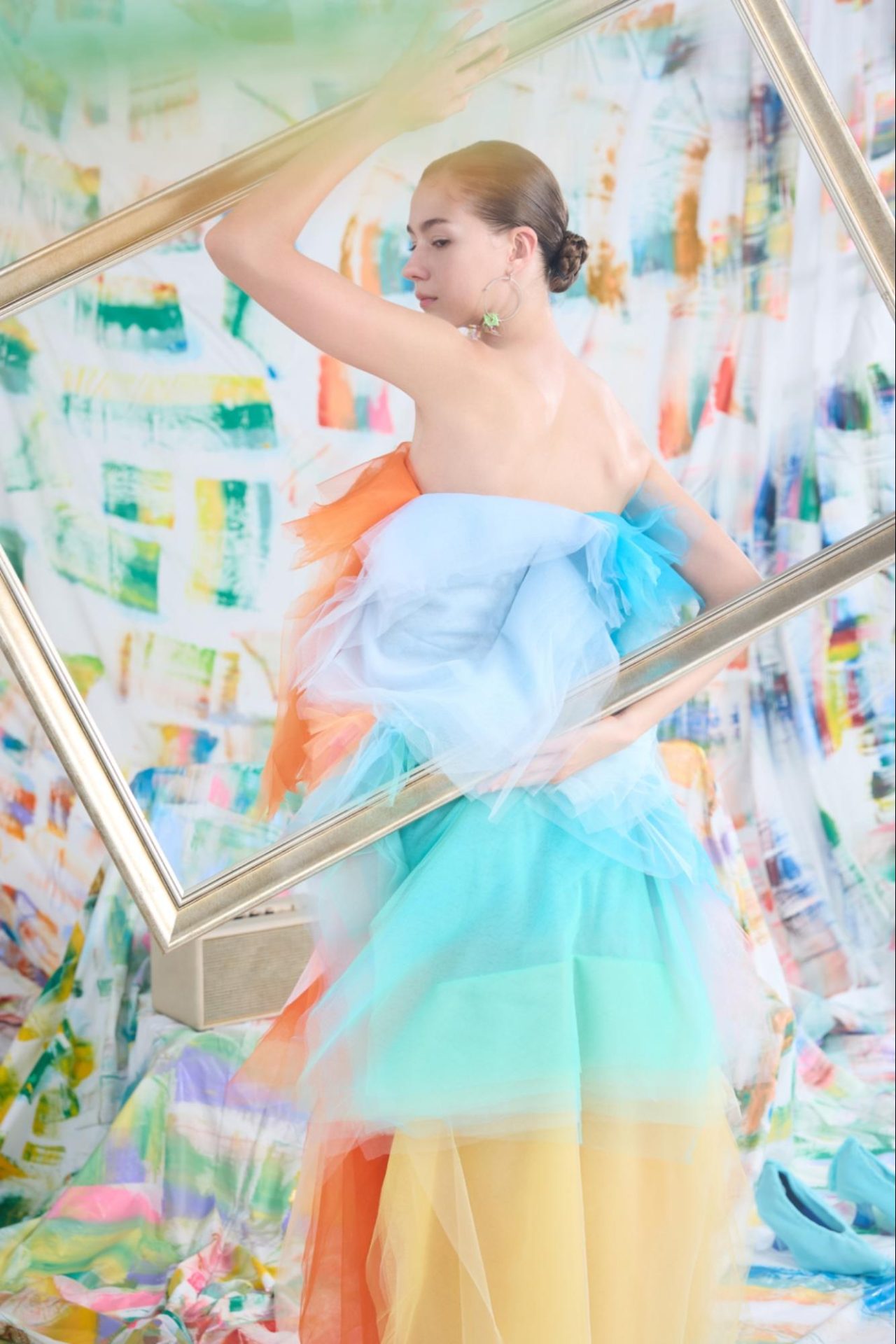
LZ: I am not someone who habitually keeps a diary or possesses an extraordinary memory, yet I deeply long to remember every stage of my life and the different versions of myself across time. Therefore, I choose color as the language to record my life. To me, “Color as Identity” is like creating an oil painting.
Pigments are applied layer upon layer onto the canvas, with each layer marking a distinct period and self. For instance, in my childhood memories, the dominant tones were black, white, gray, and navy, as my mother served as my “stylist” and favored calm, secure shades. In middle school, the memory shifted to blue and white because of my daily school uniform.
Later, when I studied at Parsons and immersed myself in oil painting color theory, I began embracing vivid, high-saturation hues. These colors are not chosen at random; they are projections of my skin, emotions, and personal identity across different stages of life.
DC: At Parsons, you called yourself a “recorder,” and your graduation collection stitched together memory fragments of daily moments. Could you elaborate on this philosophy?
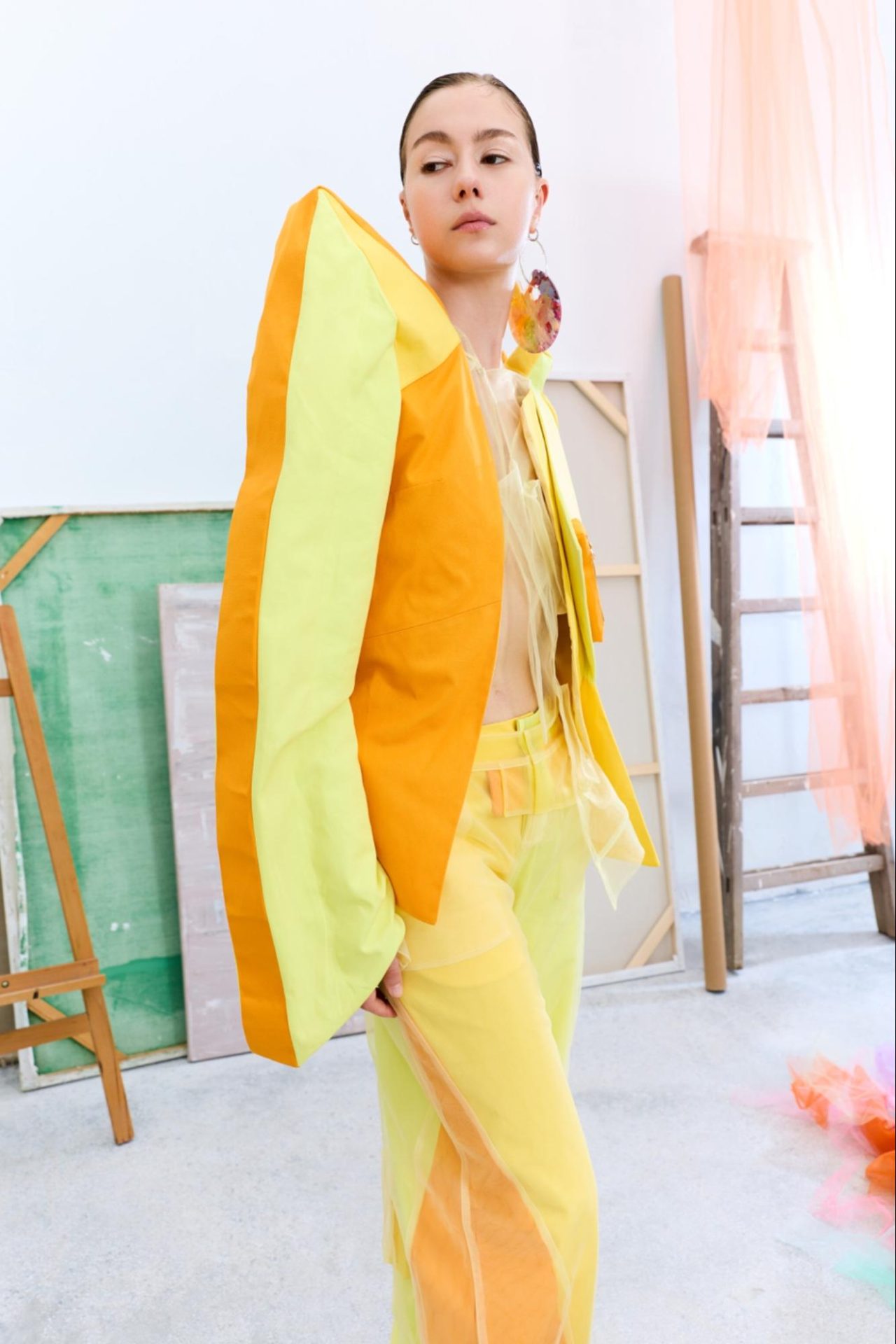
LZ: During my MFA at Parsons, I always positioned myself as a “recorder” or “archivist” of life. I believe fashion should not merely be an untouchable art piece; it ought to be a carrier of life traces and emotional memories. My creative process closely resembles collecting and stitching together subtle memory fragments, such as accidental light and shadow that touch me, quick sketches, or subtle color collisions in daily life.
I translate these abstract memory fragments into tangible garments using unique pattern-making and fabric combinations. Wearing these garments feels like draping a frozen moment of time back onto the body, fulfilling a reunion between memory and reality.
DC: Your Parsons runway collection presented soft macaron shades and transparent materials, whereas the Spring/Summer 2026 collection is more vivid, featuring multi-colored mesh paneling. What internal shift occurred between that show and this current season?
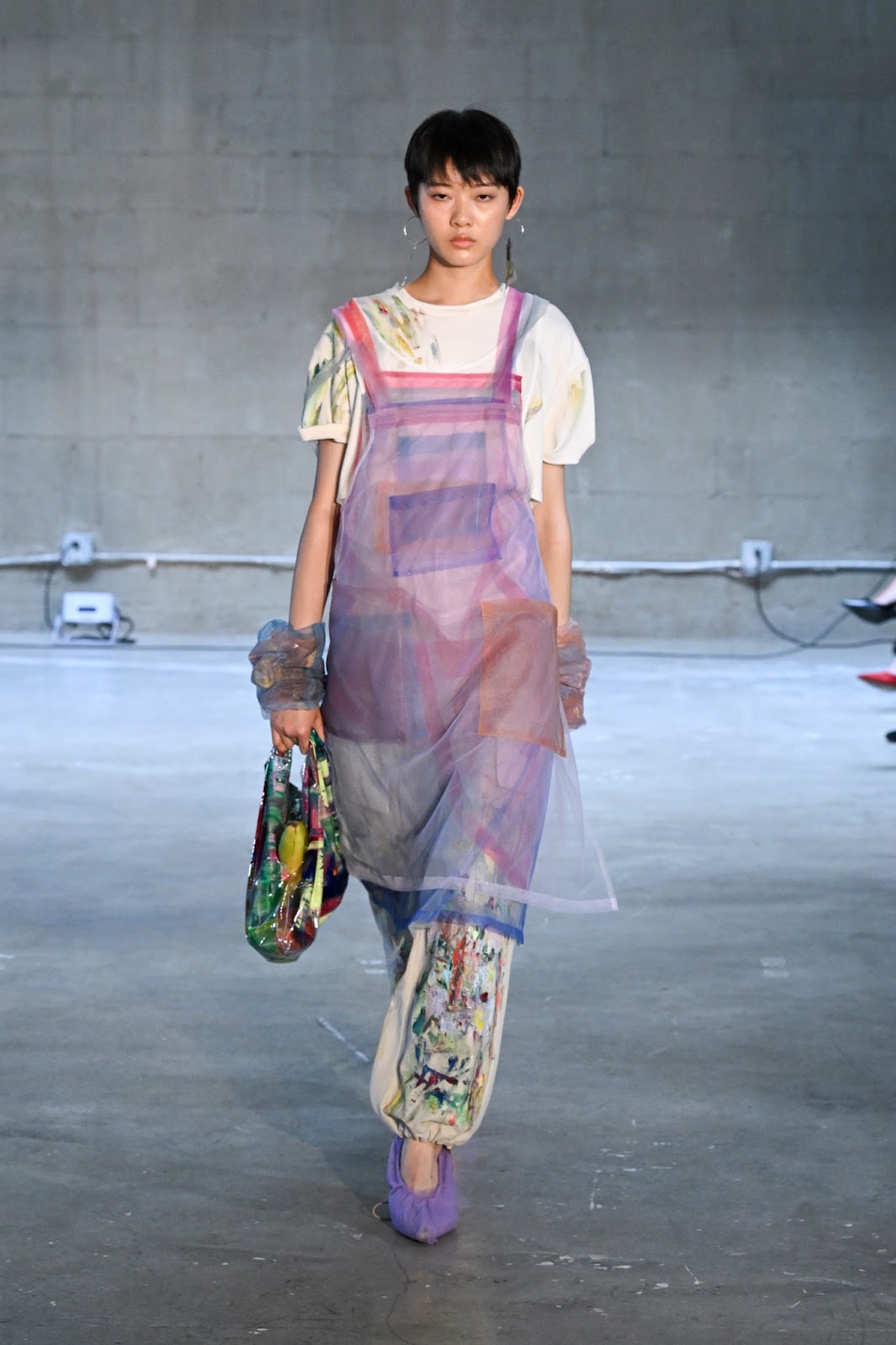
LZ: The macaron tones and sheer materials presented in my Parsons graduate collection (at New York Fashion Week) felt more like a gentle, tentative gesture, a way to protect my soft, dreamy inner emotions during my time as a student.
By Spring/Summer 2026, the colors became bolder, and the mesh paneling gained more tension and architectural structure, representing my internal liberation and power (“Color Liberation”). Transitioning from a pure creator to the helm of NYLYNOZ instilled a stronger sense of confidence and resolve within me.
I am no longer confined to subtle expressions; instead, I wish to use high-contrast, visually striking 3D fabrics to empower women to fearlessly assert their presence.
DC: Could you walk us through how a color is born in your studio through the layering of multiple transparent materials?
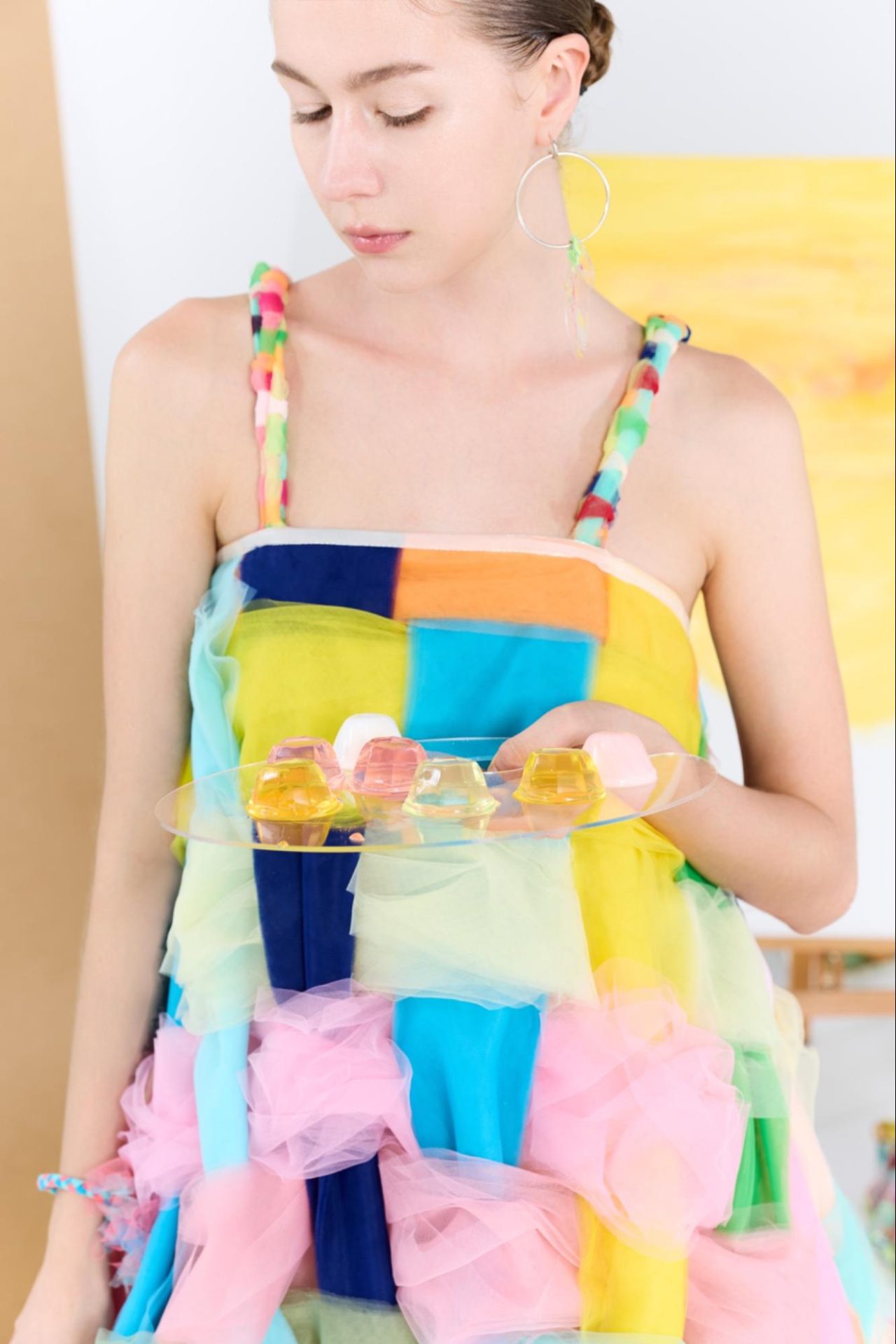
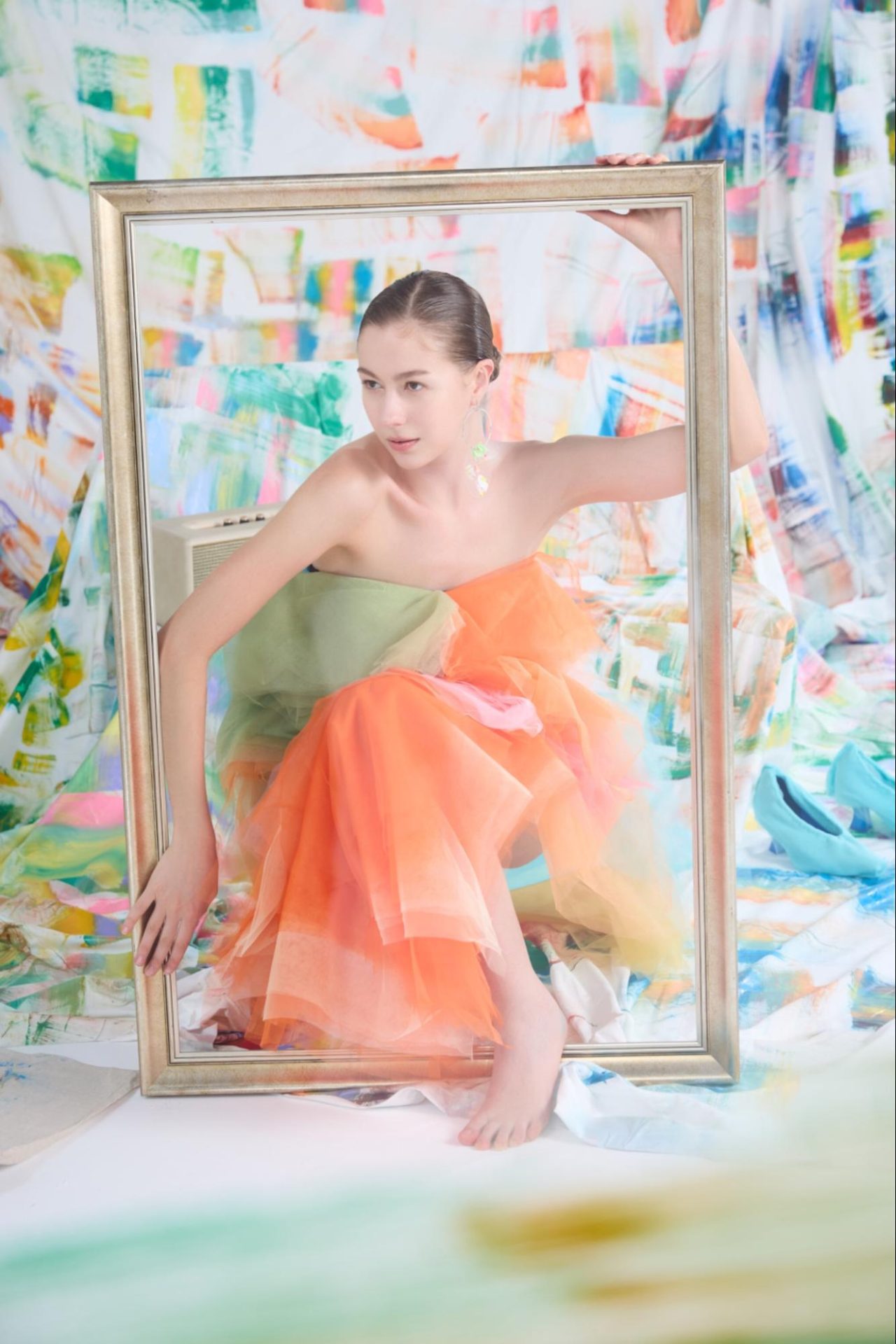
LZ: In the NYLYNOZ studio, color is never a flat, two-dimensional print; it is three-dimensional, evolving dynamically with light and bodily movement. Our experimental process closely mirrors the “glazing technique” in oil painting. We select materials of varying transparency and luminosity, like a feather-light iridescent mesh or a sheer organza, layered over a specially woven base fabric.
When yellow is layered over light blue, what emerges is not a simple green, but a fluid color that shifts in depth and hue depending on the angle of refraction and motion. Colors born from this microscopic layering hold a luminosity and vitality that traditional garment dyeing simply cannot replicate.
DC: How does a healing color palette impact the wearer?
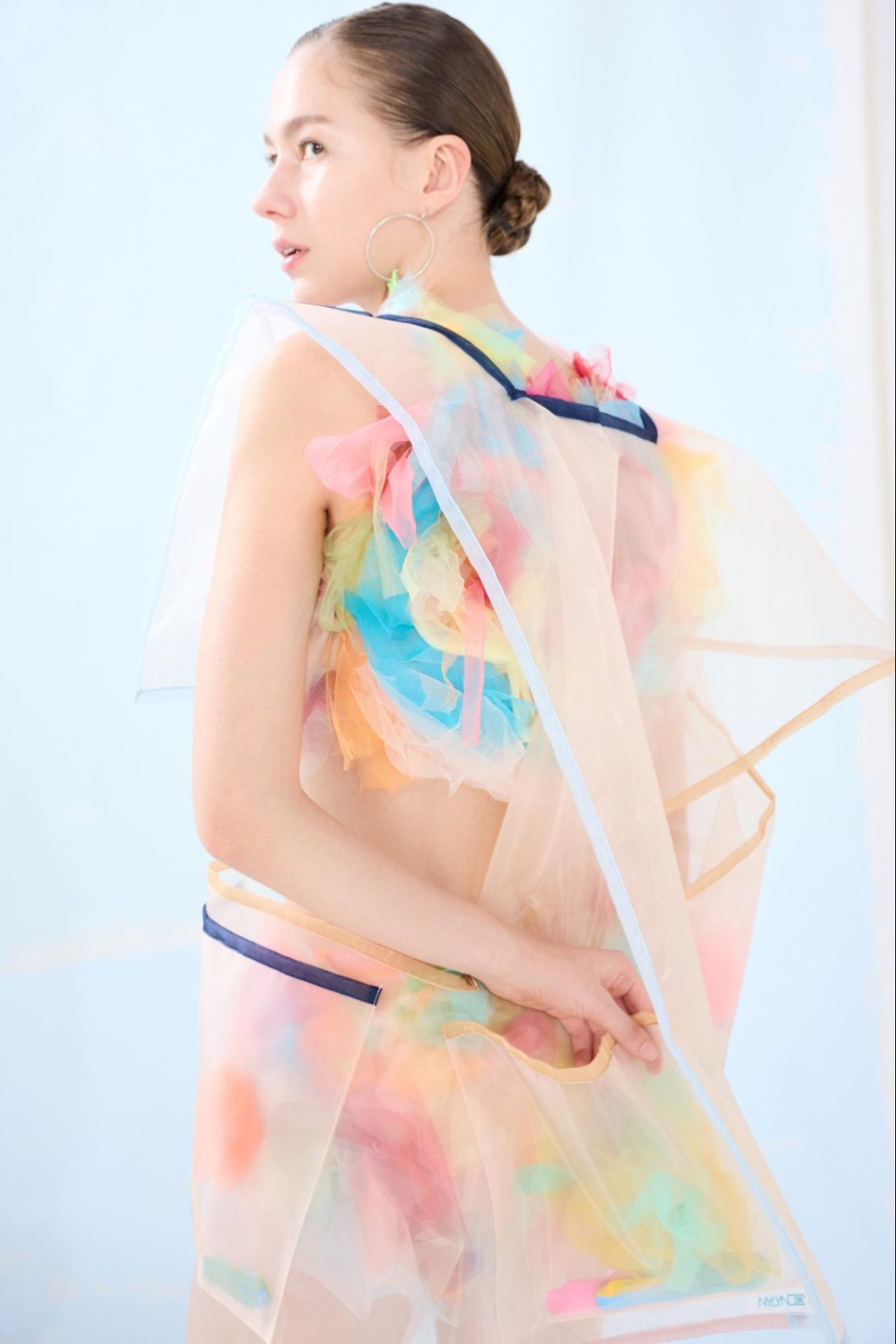
LZ: Colors possess emotional frequencies and energy. When someone puts on a garment with a meticulously balanced “healing palette,” the effect penetrates directly from the visual into the psychological. For instance, blending Naples Yellow, Spring Blue, and soft violet in subtle proportions evokes a strong psychological cue, one of warmth, lightness, and gentle companionship.
The wearer experiences a soothing sense of security in their daily life, allowing anxiety to fade and giving rise to a peaceful, grounded mindset. That is precisely what we aim to convey: clothing is not just about how the world sees you, but also your own emotional armor and comfort.
DC: You mentioned that different fabrics carry different emotions, and Studio Dust transforms your fabric remnants into new creations. Where is Studio Dust guiding you?
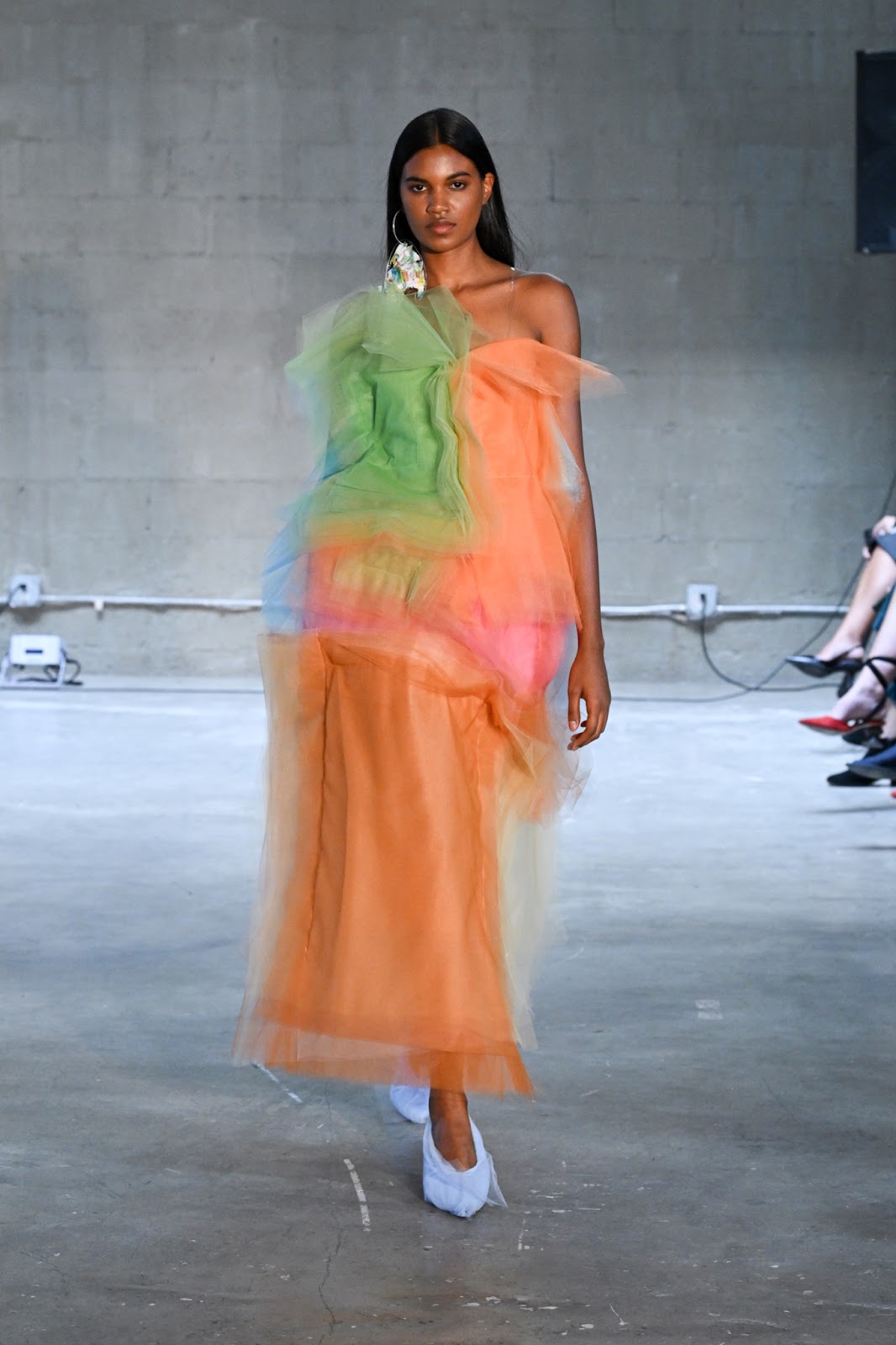
LZ: Studio Dust is a project extremely close to my heart. During bulk production cutting and haute couture craftsmanship, every trimmed piece of organza or mesh remnant retains the touch of the creative process and the inherent vitality of the material.
This initiative guides me toward a deeper commitment to sustainable fashion and zero-waste principles. It challenges me to step beyond the resource-consumptive logic of traditional garment production and look at “remnants” through a gentler lens.
By upcycling, weaving, and reassembling these “dust and fragments” of couture fabrics into micro-couture creations, we bestow a new artistic life upon them. This not only lightens our environmental footprint but also enriches the narrative of NYLYNOZ.
DC: If you could dress a famous historical woman in a Nylynoz piece, who would you choose and why?
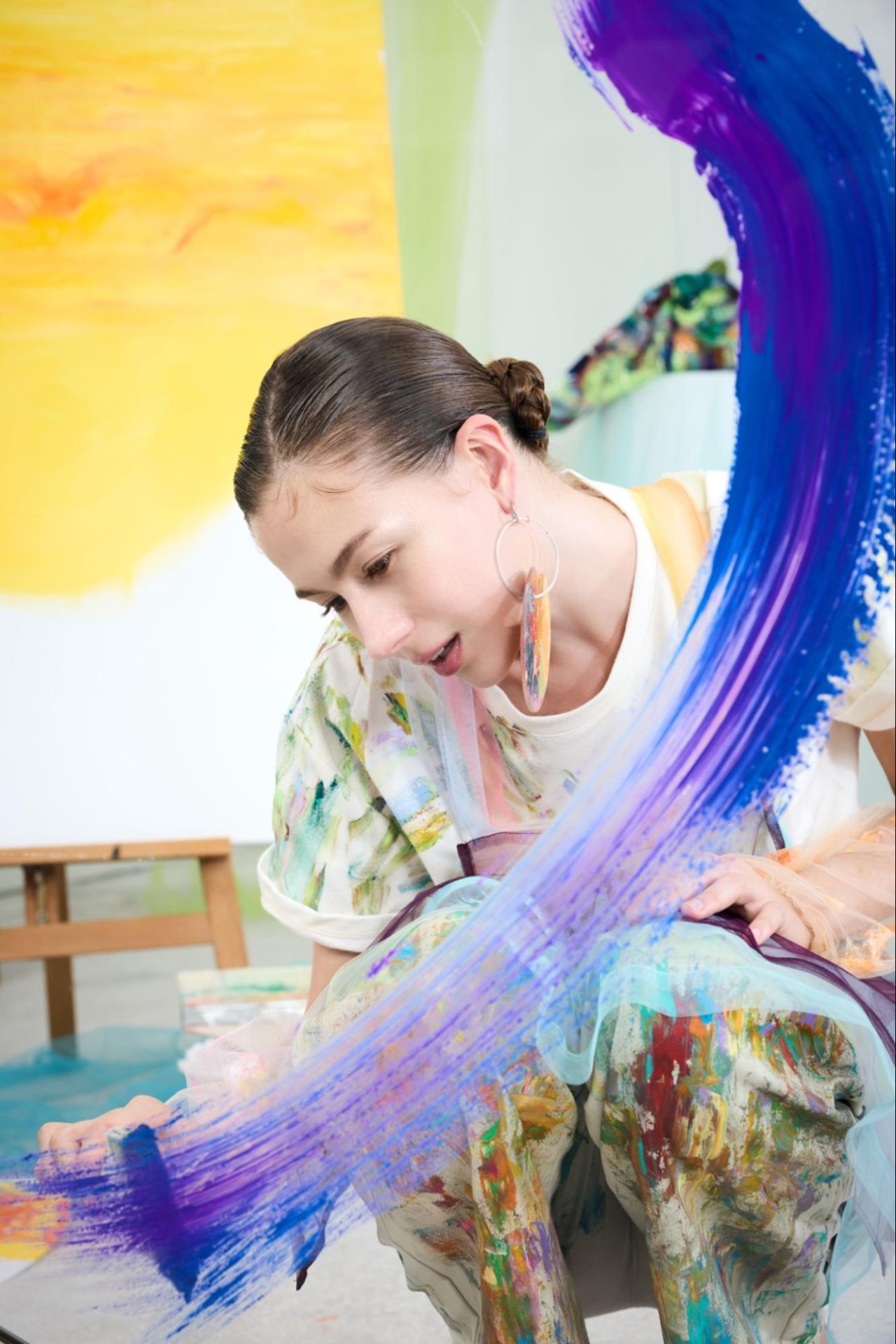
LZ: I would choose the legendary Mexican painter, Frida Kahlo. Throughout her life, Frida used intense, vibrant colors to fight against her physical suffering and tragic fate. Treating her body as a canvas, she transformed color into her strongest armor and her ultimate identity statement. This resonates deeply with NYLYNOZ’s philosophy of “Color as Identity” and “Color Liberation.”
Color is never mere decoration, but a declaration of inner emotion and self-identity. If I could design a piece across time for her, I would weave our studio’s oil painting color palette into NYLYNOZ’s signature sculpted, light-refracting mesh. Using layered fabrics filled with architectural tension and fluid light, I would create a powerful garment to honor her fiery, courageous, and everlasting vitality.
DC: As a rising star in the fashion industry, what advice do you have for current design students?
LZ: My advice is: Protect your authentic personal narrative, and start understanding the real language of commerce and society early on. During your time in school, explore your design language to the fullest. Never fear that your concepts might be too personal or niche. It is precisely those singular personal memories and emotions that give you an irreplaceable identity in the vast fashion landscape.
At the same time, maintain a deep respect for technique, textiles, and execution processes. Art and commerce are not mutually exclusive; find your core narrative and learn to present it clearly and professionally, and the world will naturally hear your voice.