
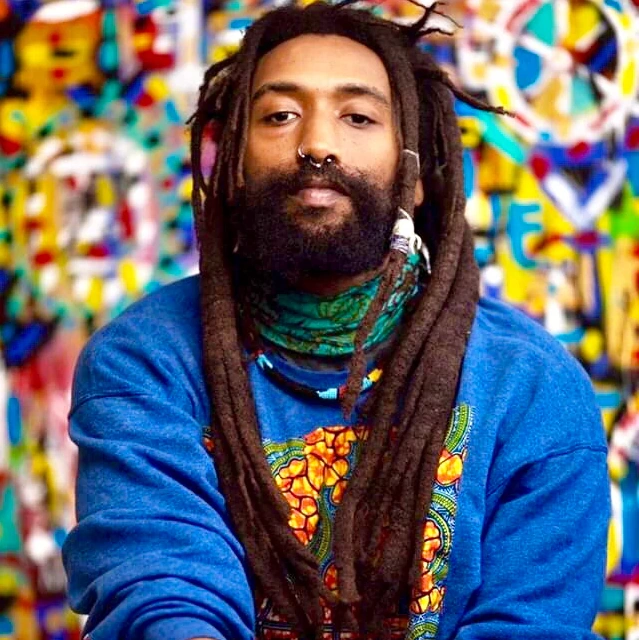
I was born in Richmond, VA and didn’t start painting seriously until I I was 28 years old, living in Washington, DC working as a full time bike messenger. I lived in DC from 2005 – 2020, and that’s where I became a self developed painter. In 2007, I met an artist from the Ivory Coast who grew up in Paris. He was the freest artist I’d ever come across. At the time I was an aspiring jazz guitarist and poet, but the logical aspect of music making made that particular medium less intuitive and I needed a creative practice that allowed me the ability to experiment, and use my intuition without having to be logical and academic. Khalid Thompson
DC: What is your favorite color and why?
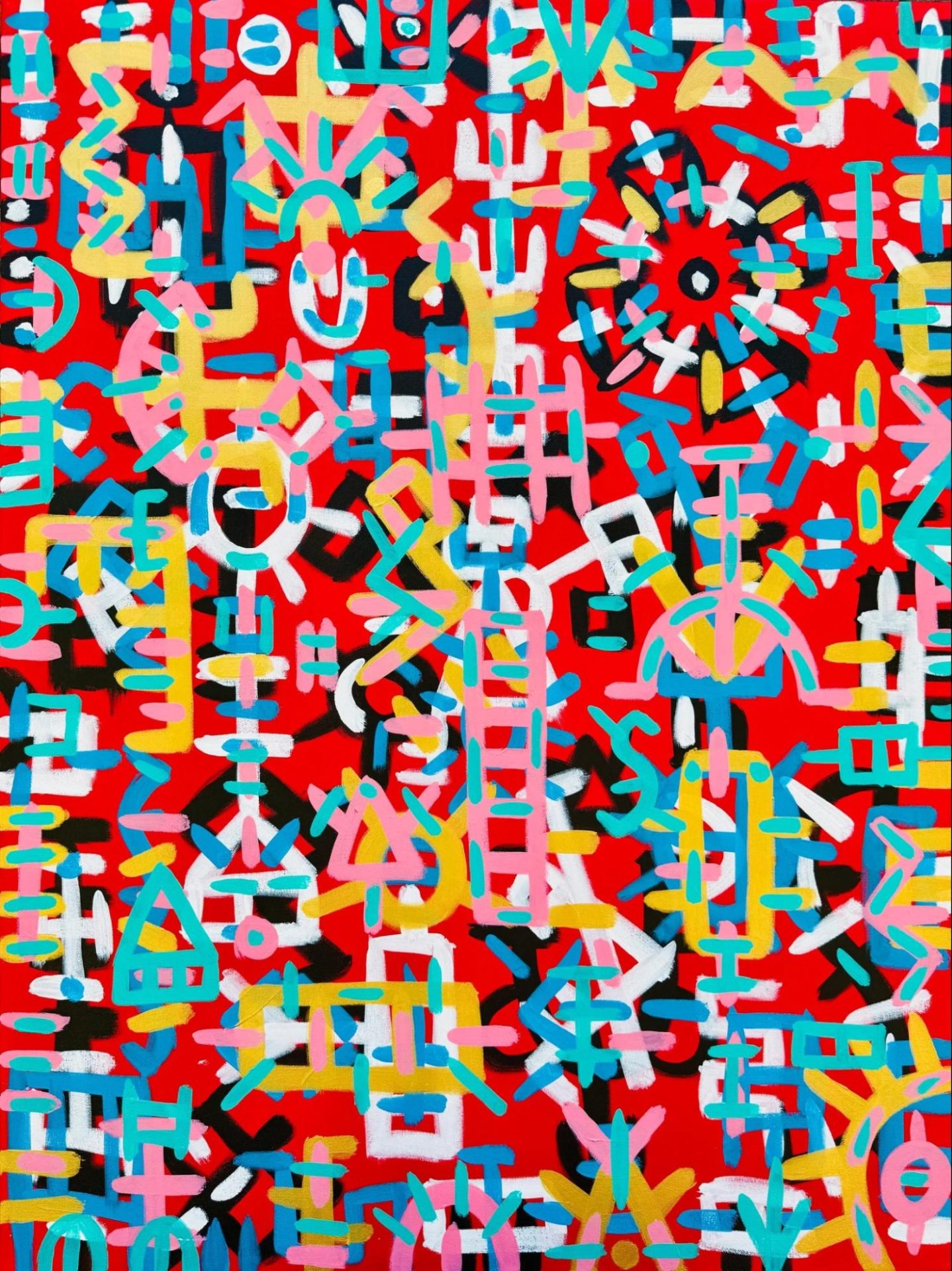
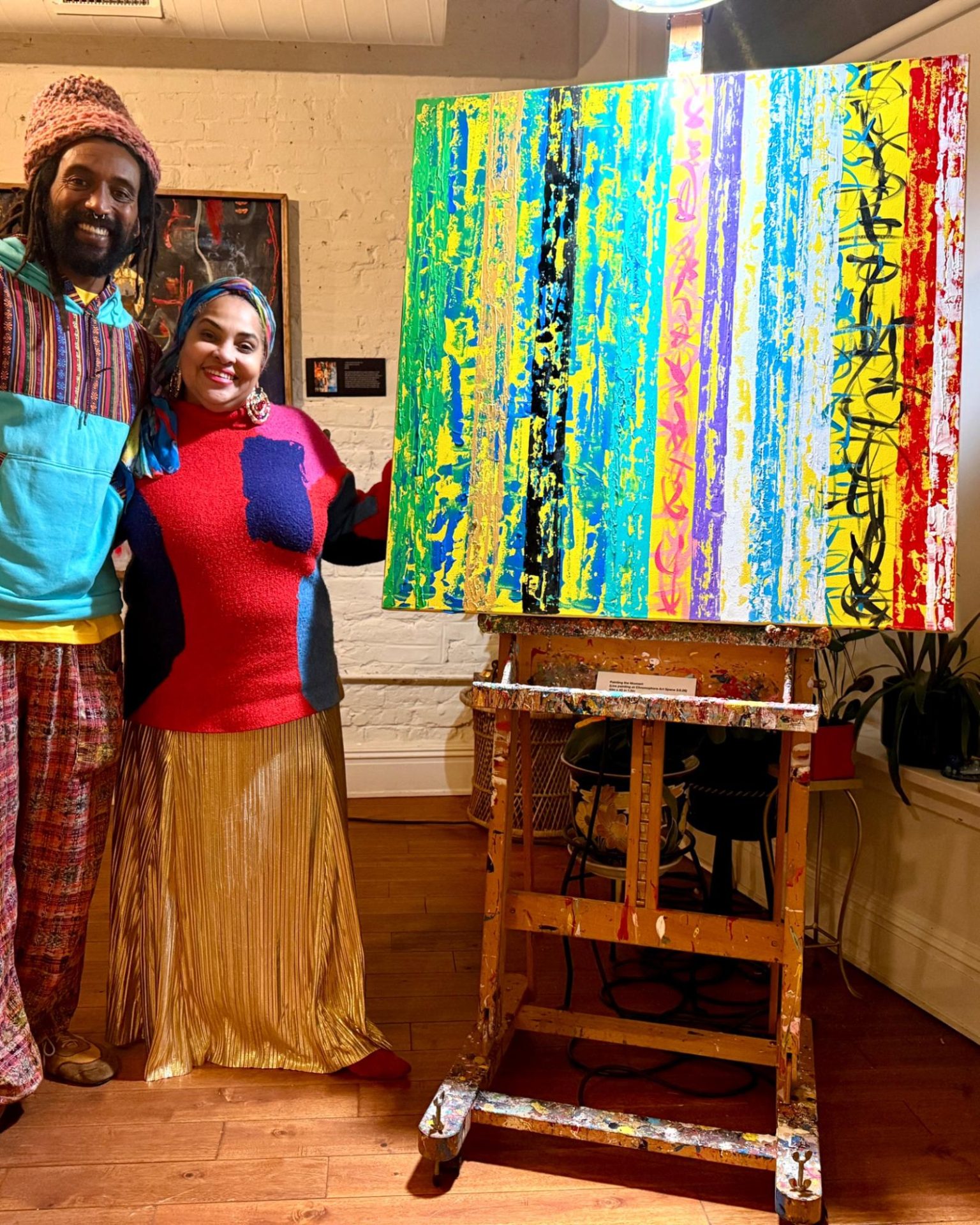
KT: Every color and tone is essential to expression, whether it plays a dominant or supportive role in a composition. I don’t have a favorite color but I do have a strong attraction to bold, bright vivid colors such as bright yellow, cerulean blue and primary red. Black and white are also essential colors for me because of their ability to add weight or lightness to other colors within the pictorial space.
DC: What is Maximum Oneness?
KT: Maximum Oneness is the oneness of existence as omnipresent, omniscient, and omnipotent infinity, generating maximum energy. All productive and destructive forces express the eternal harmony we call reality. Change is the fulcrum of the universe; a direct expression of creation. Because the foundation of my approach is rooted in improvisation, I surrender myself to the unknown of each succeeding moment with the intention of being a conduit for the pure creative energy of our cosmos.
DC: Please tell us about the work of artists who’ve inspired you.
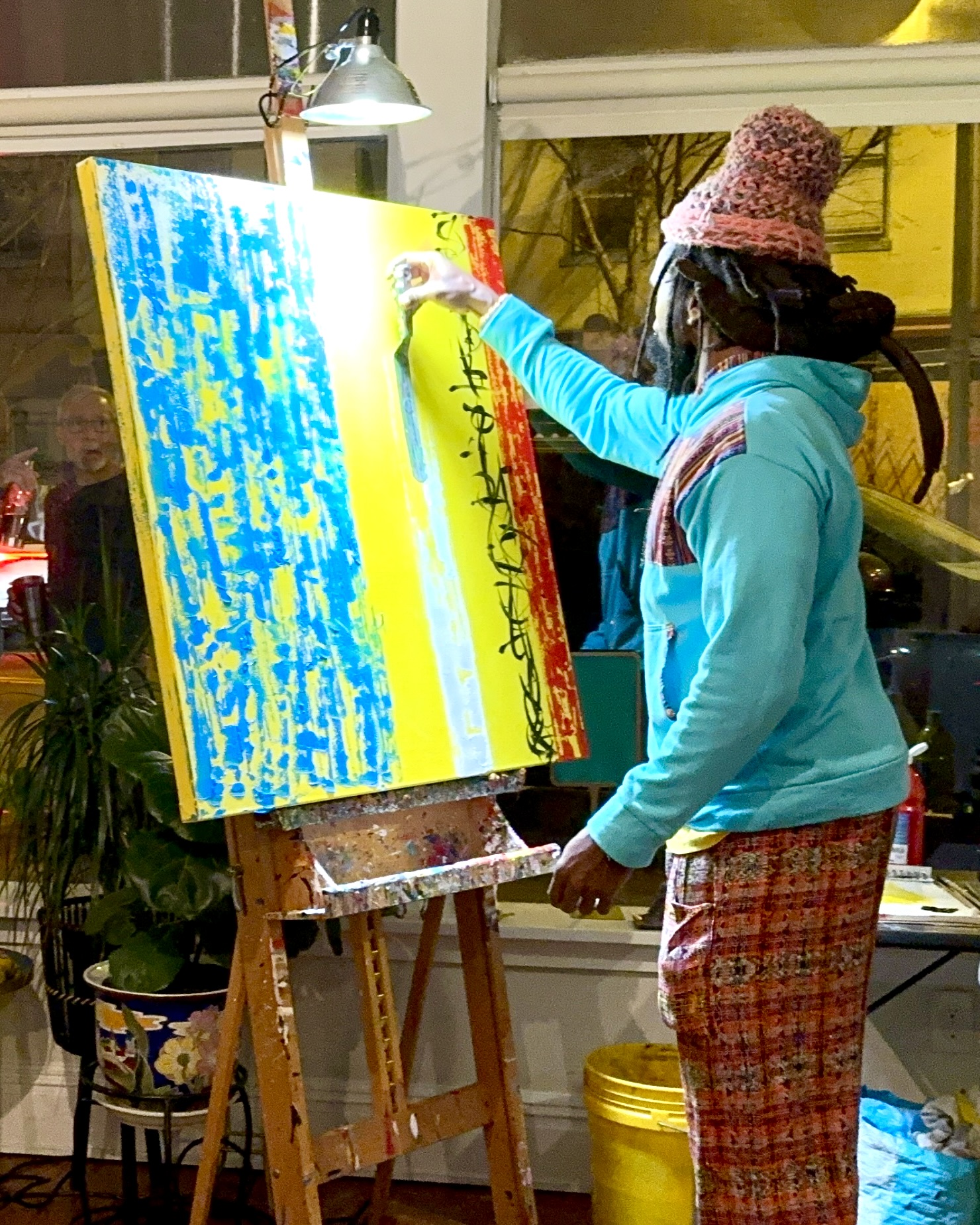
KT: When I became exposed to artists such as Jackson Pollock and post World War II abstract expressionism, it completely changed the way I saw the practice of visual art. I had always been an intuitive artist, but Pollock’s gestural, energetic abstractions inspired me to rely solely on intuition and immediacy, using art as a cathartic, liberating experience. Artists such as Jack Whitten expanded abstraction way beyond the boundaries of the canvas, creating incredible mosaic works made from dried acrylic in his studio. Jack was also an amazing wood carver who’s abstract sculptures generate a sense of timelessness drawing from the aesthetic qualities of antiquity and the contemporary world.
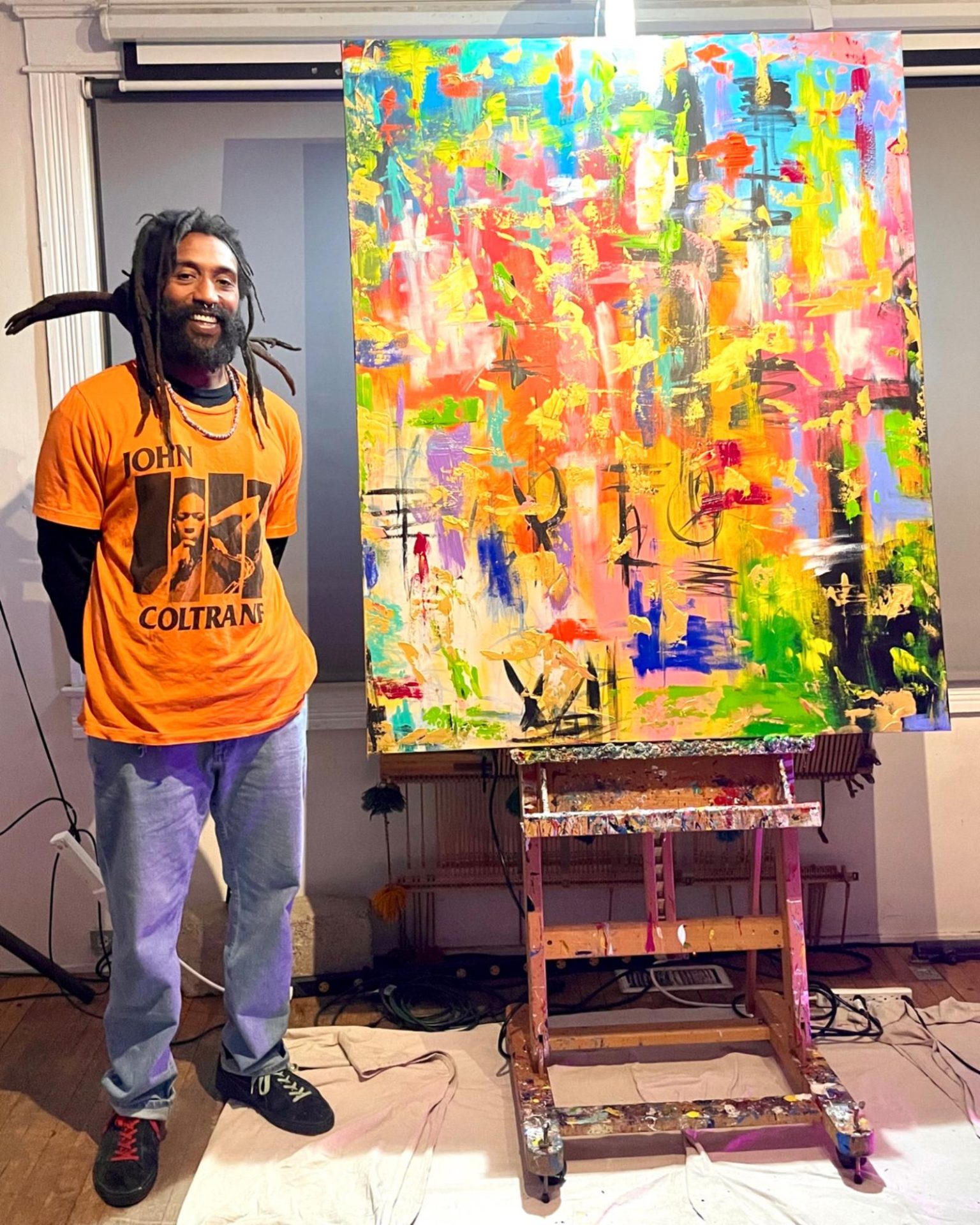
DC: How does color influence the direction and emotion of the worlds you build for your audience?
KT: Color and form both play an essential role in my attempts to have connection with the audience. However, the colors I use lay the foundation of those efforts. Light moves faster than sound, so when I start a new painting, the first vision that comes to me is one of color. Every other element is built on the basis of color awareness.
DC: Where do you find artistic energy and inspiration?
KT: Motivated by reflection and a focus on inner growth, I often ponder the mystery of existence and am in awe of the experience we call life. We are living inspiration so we never have to find it, we just have to allow our perspective to shift with the tides of change and be open to the importance of creativity no matter the circumstances.