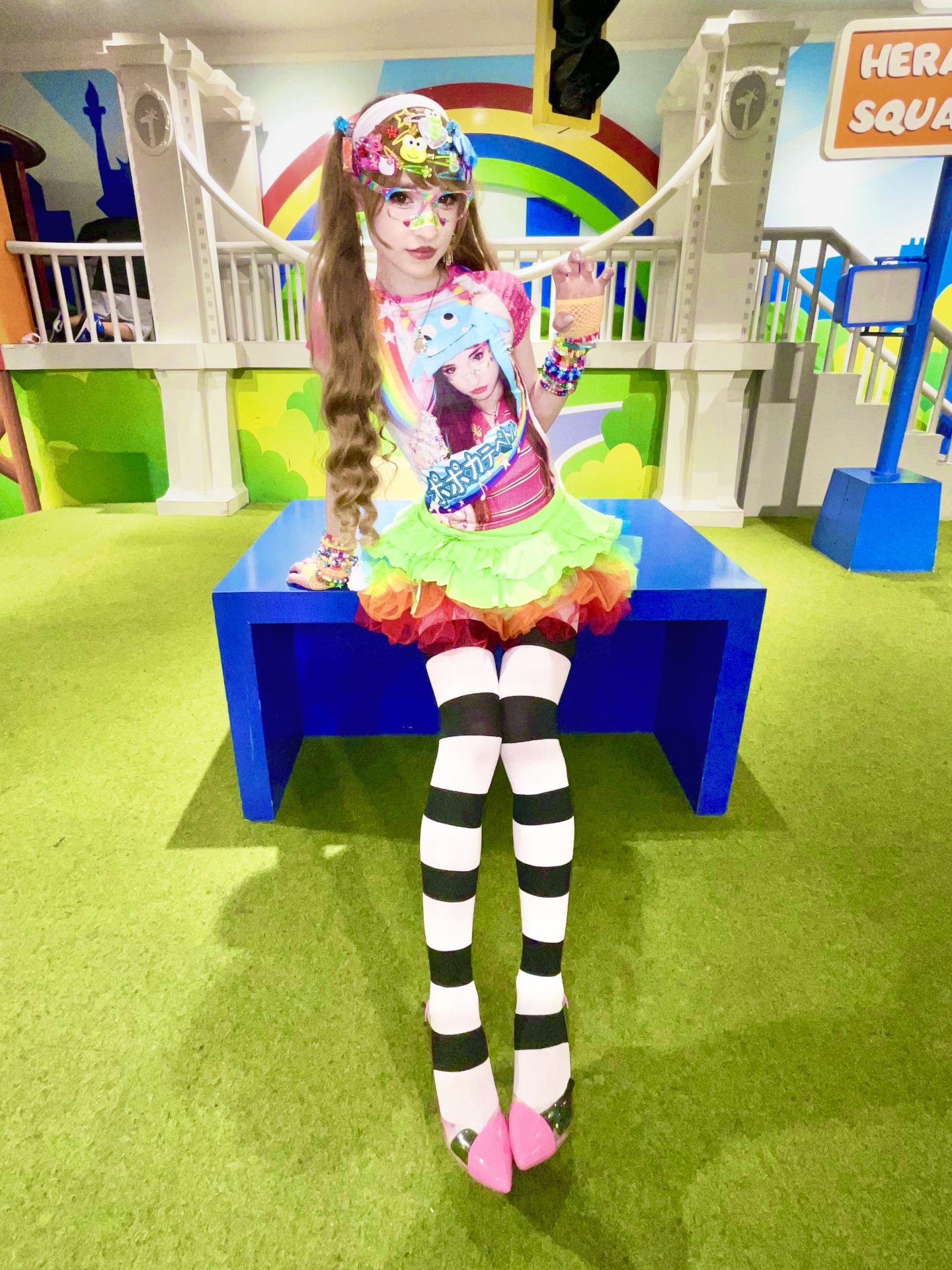
In New York City, the Decora movement has reemerged as a joyful, community driven extension of the rebellious street style born in Harajuku. Teddie Osita shares how long standing inspirations, from Japanese designers like Sebastian Masuda and Shojono Tomo, led her to fully embrace Decora in NYC. For Teddie, color, playfulness, and handmade details are acts of self definition and resistance, transforming fashion into a daily declaration of joy. Within the NYC Decora movement, Teddie’s style is declarative, an archive of influences that stretch from Japanese street fashion to the improvisational bravado of downtown New York, translated into a language of colorful intention.
DC: How did you find the Decora community?
TO: Nicki Minaj had a big Harajuku fashion phase when I was a kid. She introduced me to lots of Decora brands and Japanese designers like Sebastian Masuda and Shojono Tomo. Throughout my teenage years, I bought lots of Decora-style clothes and dressed alternatively, but I wasn’t quite Decora. When I moved to New York city about a year ago I found the Decora community by going to in-person events for Harajuku fashion, and I finally felt enabled to go all out with my style. Ten Ten, Jandora, and Pudding are all to thank for building the community here!
DC: What part of Decora’s early Harajuku history resonates most with you?
TO: Decora, and other Harajuku fashion styles, are the product of the socially conservative dominant culture in Japan. Teenagers and young adults in Harajuku rebelled against that repression by expressing themselves through fashion. I think the origin of Decora is inseparable from the fashion. When I go to class or walk down the street, I know I’m sticking out as a rainbow in a sea of browns and blues. To me, expressing myself how I want, and being unapologetically joyful, is rebellion. I refuse to be gray, both in style and in mood.
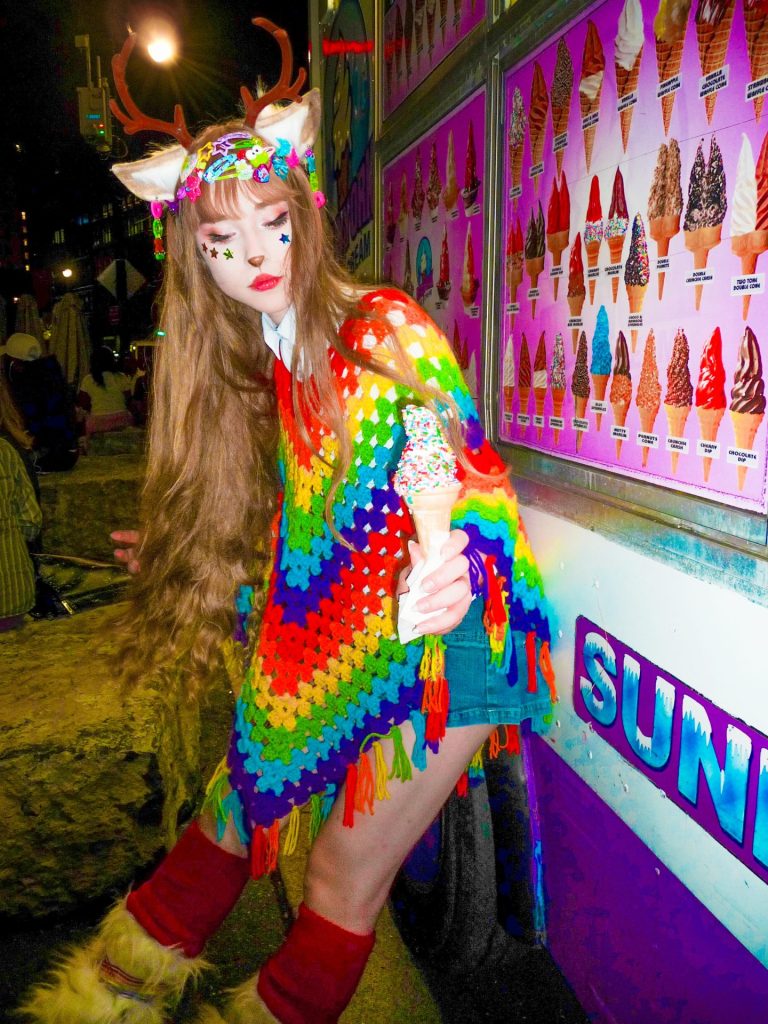
DC: How does your style represent the joy and playfulness of the movement?
TO: Sometimes people think that I dress like a little girl. My knee-jerk reaction is, “No little girl dresses like this!” But my second reaction is, “What’s wrong with that?” Maybe we should all be more like little kids. I wear my hair in pigtails and wear frilly skirts. I put stickers on my face. A few months ago, after I met one of my childhood idols, Quannah Chasinghorse, I posted a video on Instagram crying about it while wearing pigtails and ribbons in my hair. After it got so many views, I got embarrassed, and wondered how much longer it’ll be socially acceptable for me to act so childish. I said “What will I be doing when I’m 30?” Pudding said, “Still crying over your childhood idols with pigtails and ribbons in your hair!” And he’s right! It’s okay to be like a little kid.
DC: What messages are you expressing through your choice of color and fashion?
TO: In Decora, most people make their own clothes or accessories, at least to some extent. People wear objects and motifs that they care about. I wear lots of Indigenous beadwork in my Decora outfits. One of my favorite hair clips is from a store called Relative Arts. It says “I ♥︎ Lenapehoking,” which is the name of New York City in the Indigenous language from here. I love that Decora allows us to all express things that are personally important to us. Sometimes, for me, that’s something big, like decolonization, and supporting Indigenous artists. Other times, it’s something smaller, like wearing a bracelet a friend made for me, or a hat I got while traveling.

DC: What have you learned about the community?
TO: So many people have been convinced to be insecure and unsure of themselves. But in the Decora community, everyone is so free-spirited. I love being around other Decoras, because we know that many of society’s rules and expectations are made up, and we can do what we want. One time, I met a guy who was afraid to wear scarves because he thought people would know he wasn’t a scarf person. He was serious. I couldn’t believe it. Decoras aren’t invincible, but I think we all have confidence and drive, that I love being surrounded by. Our lives are to do whatever we want, and the Decoras know that!